// Merchant stack · Terminals

Certified hardware,
run from the cloud.

PAX terminals and Android tablets with Veslo Pulse on board — the edge middleware that abstracts the hardware, keeps selling when the line drops and reports its own health back to you. Shipped, activated and monitored without a van.

// 01 · The estate

One register, several bodies.

The same software runs on a handheld at the table, a countertop unit at the till and a tablet at the counter. The merchant picks the body; you ship one configuration.
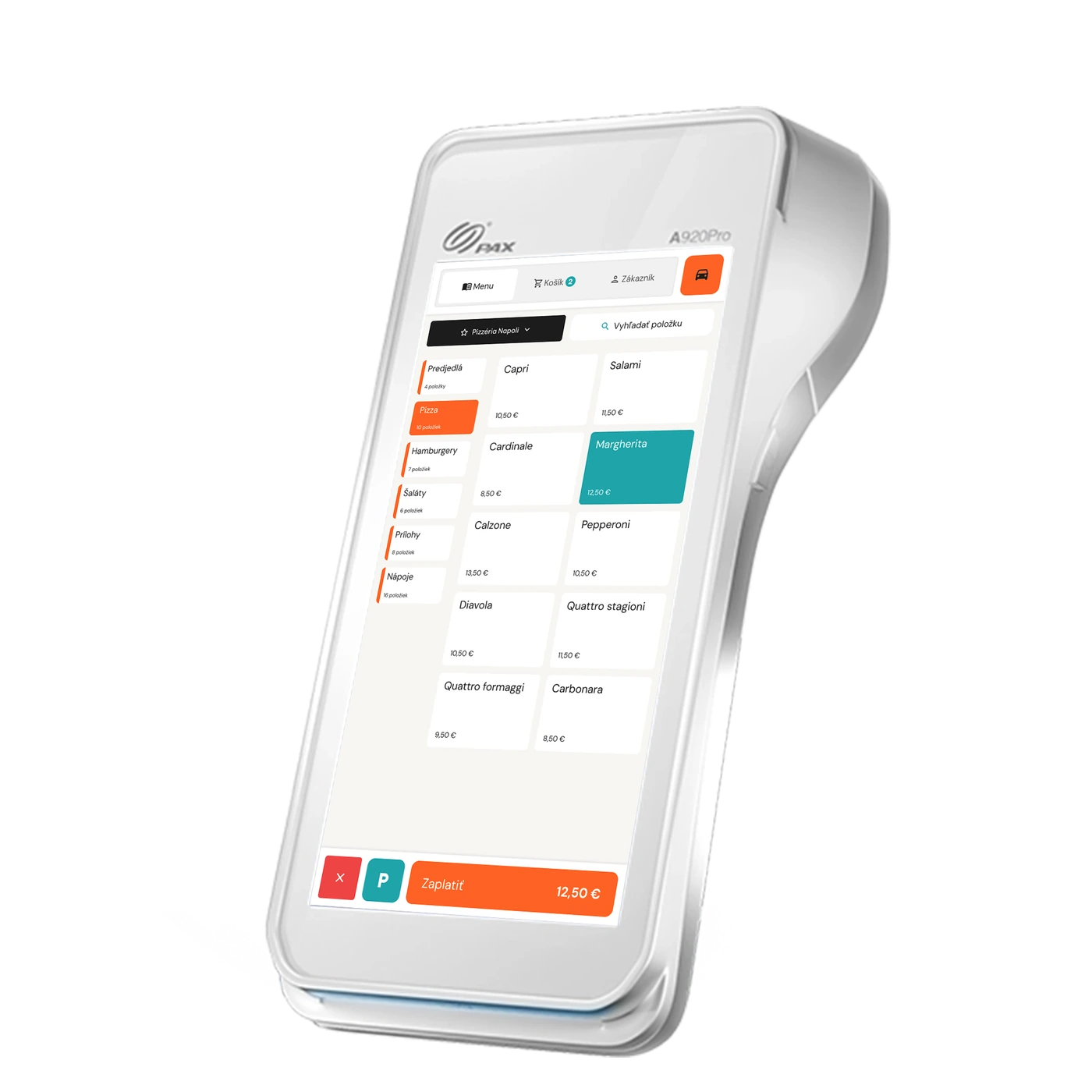
Veslo POS running on a PAX A920 Pro handheld
01

Handheld, counter or tablet

PAX A920 Pro in the hand, A80 or A8900 on the counter, an A35 pin pad on an attended lane, an Android tablet as a full register.

02

Register, card terminal and printer in one

On the A920 Pro the whole point of sale is a single device — order, charge and print at the guest.

PAX A920 ProHandheld · 5.5″ · printer · 4G + Wi-Fi
PAX A80Countertop · printer · Ethernet + Wi-Fi
PAX A35PIN pad · attended lane · semi-integrated
PAX A8900Countertop Android · large screen · printer
Android tabletFull register at the counter, paired to a terminal
IngenicoSupported alongside PAX where the estate demands it
// 02 · Veslo Pulse

Middleware on every device.

Pulse runs on the terminal itself — cross-OS and vendor-agnostic. It turns whatever hardware is on the counter into one clean API, so nobody writes drivers or chases a manufacturer's SDK.

03

Hardware abstraction

One universal API for the whole fleet. No custom drivers, no proprietary SDKs, no per-model integration project.

04

Offline resiliency

Local business logic and a secure queue engine keep the shop trading through an outage, then sync everything once the line is back.

05

Go-to-market accelerator

Local legislation and payment standards are encapsulated — a new market becomes a configuration, not a development project.

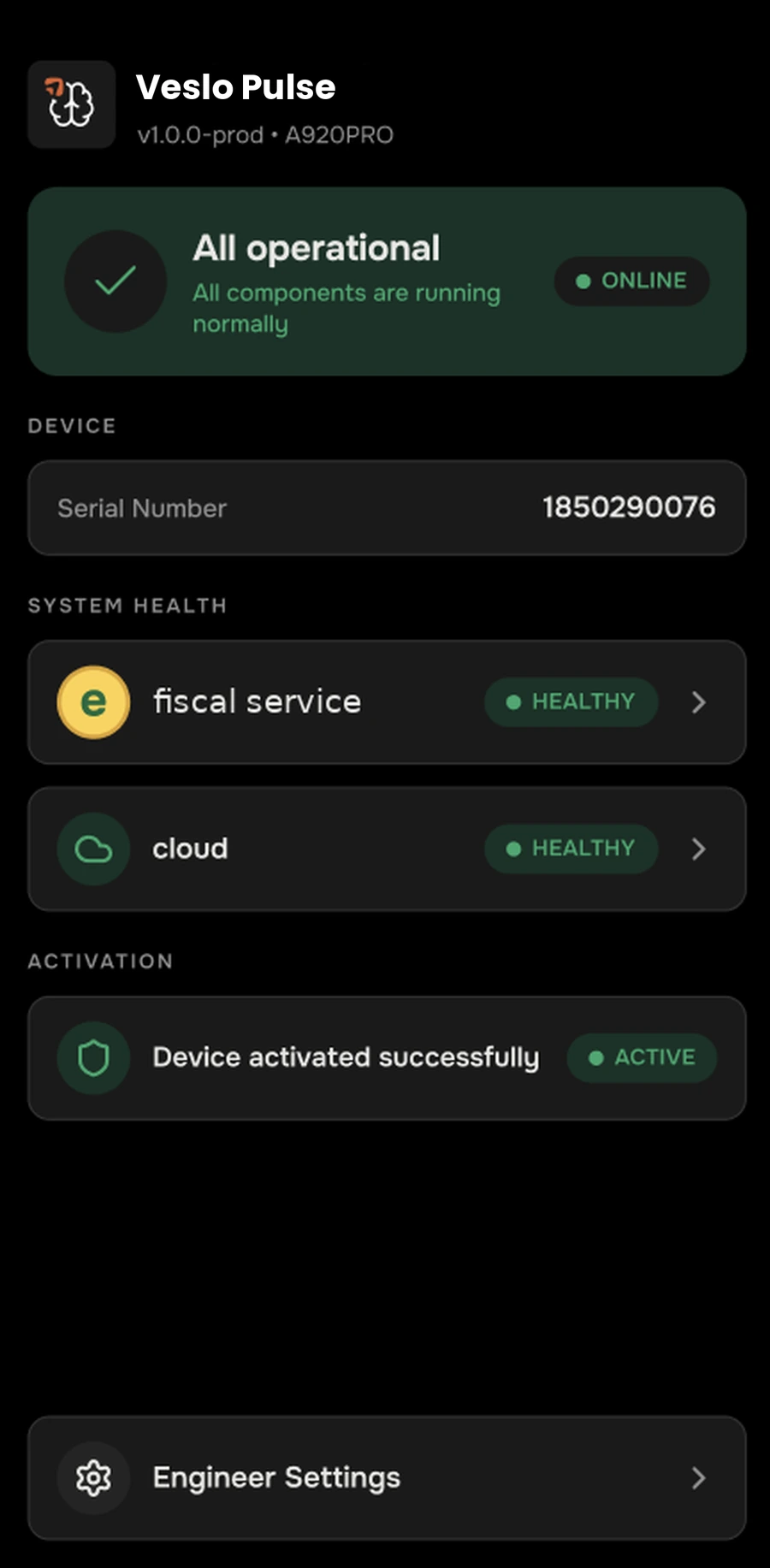
Veslo Pulse on a terminal — all components healthy
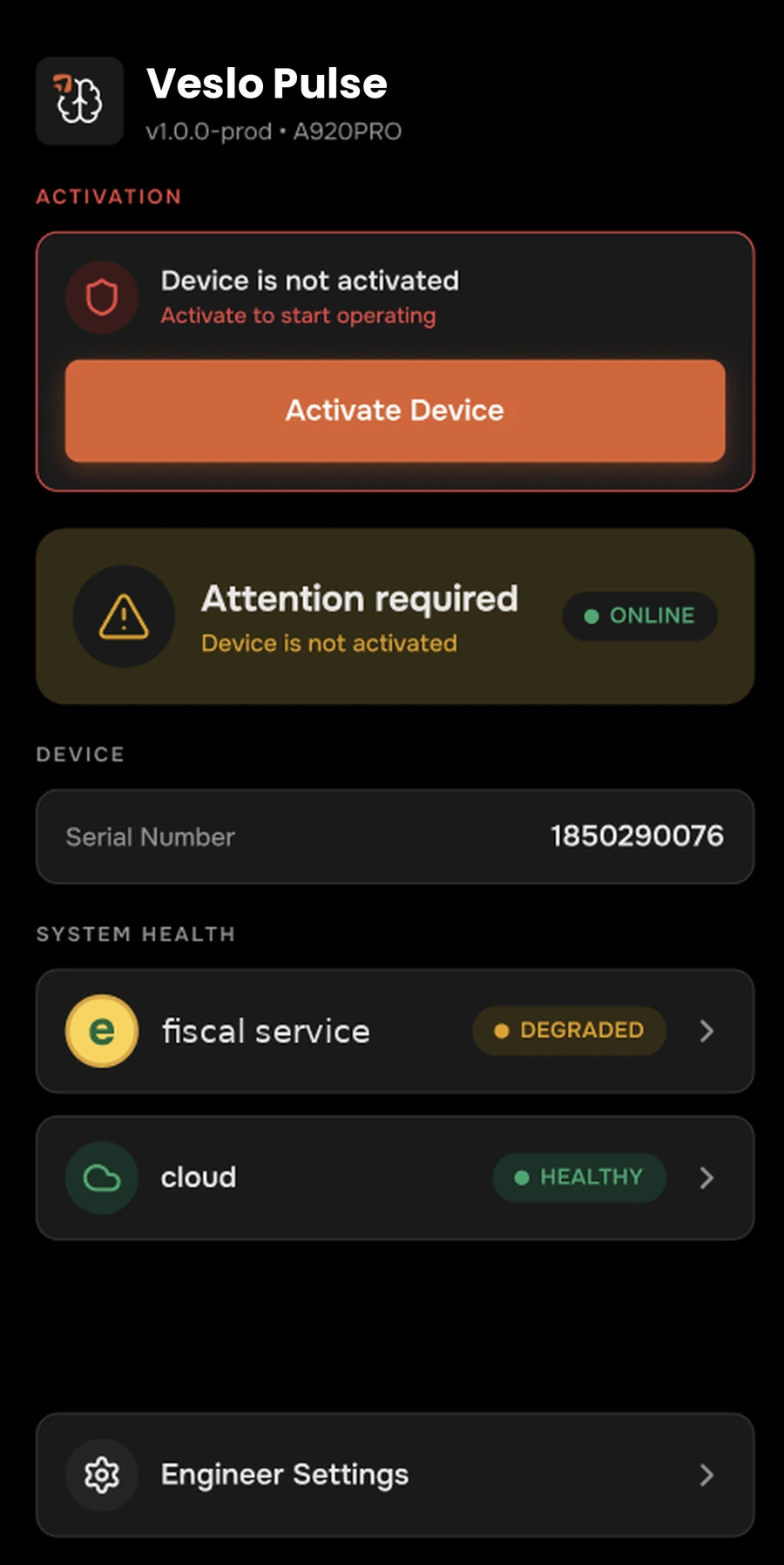
Veslo Pulse on a terminal — attention required
// 03 · On-device monitoring

The device tells you what is wrong.

Pulse ships with a monitoring surface on the terminal itself. Serial number, activation state, firmware version and live component health — an engineer sees the real state without a laptop and without calling support.

06

Live component health

Fiscal service and cloud connectivity reported as healthy or degraded, in real time, on the screen in front of the technician.

07

Activation and identity

Serial number, activation state and firmware version on the home screen — the three things every support call starts with.

08

One-tap diagnostics

A clear alert when something needs attention, with engineer settings one tap away.

09

Zero-touch fleet management

Telemetry streams to the cloud and updates go out over the air. Merchant, ISO, acquirer and vendor see the same fleet.

Ship it, activate it, forget it. The device reports in.

Fleet management on the platform →